Indoor cat welfare – advanced environmental enrichment protocols
The Psychology of the Indoor Feline
While keeping cats indoors significantly increases their lifespan by protecting them from infectious diseases and trauma, it places the burden of environmental stimulation entirely on the caregiver. An unoptimized indoor territory often leads to chronic boredom and frustration. Indoor cat welfare requires a proactive approach, utilizing advanced environmental enrichment to satisfy the complex ethological needs of an obligate carnivore living in a confined space.
Expanding Territorial Complexity
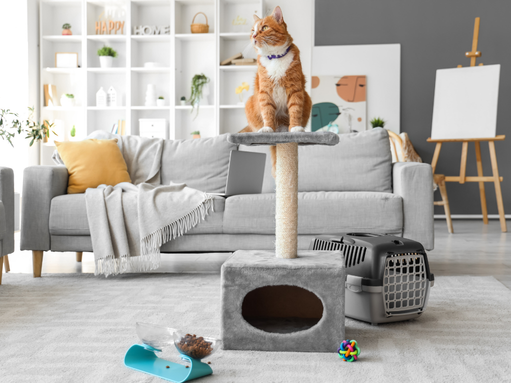
Cats perceive their territory in three dimensions. A common deficit in human-centric homes is the lack of accessible vertical space. Providing high vantage points, such as securely mounted shelves or tall climbing structures, allows the cat to monitor its environment from a position of safety. This vertical expansion is a critical component of feline psychological health, significantly reducing stress and building territorial confidence.
Simulating the Predatory Sequence
In a natural environment, a cat expends considerable physical and cognitive energy hunting. Indoor environments must replicate this biological necessity through interactive play that mimics the predatory sequence. Utilizing wand toys to simulate prey movement, followed by a tangible reward like a meal or a treat, fulfills this hardwired ethological drive and prevents frustration-related behavioral disorders.
Olfactory and Cognitive Stimulation
Feline perception is heavily reliant on scent. Integrating sensory enrichment into the daily routine prevents cognitive decline and behavioral apathy. This can be achieved by introducing cat-safe plants, utilizing food puzzle toys that require problem-solving to obtain nutrition, and offering novel objects for olfactory investigation. Engaging a cat’s mind is as vital as engaging its body, ensuring a holistic approach to its daily welfare.
Strategic Resource Distribution
A fundamental aspect of environmental optimization is the precise placement of core resources. Cats naturally compartmentalize their living space. Forcing a cat to eat, drink, and eliminate in close proximity violates its instinctual preferences. An optimal environment features a decentralized distribution of resources, with food, water stations, litter boxes, and resting areas situated in distinctly separate, quiet zones to minimize territorial anxiety.
